
When the Method Becomes the Myth
How fear, shame, and gatekeeping teach athletes and parents the wrong story about learning
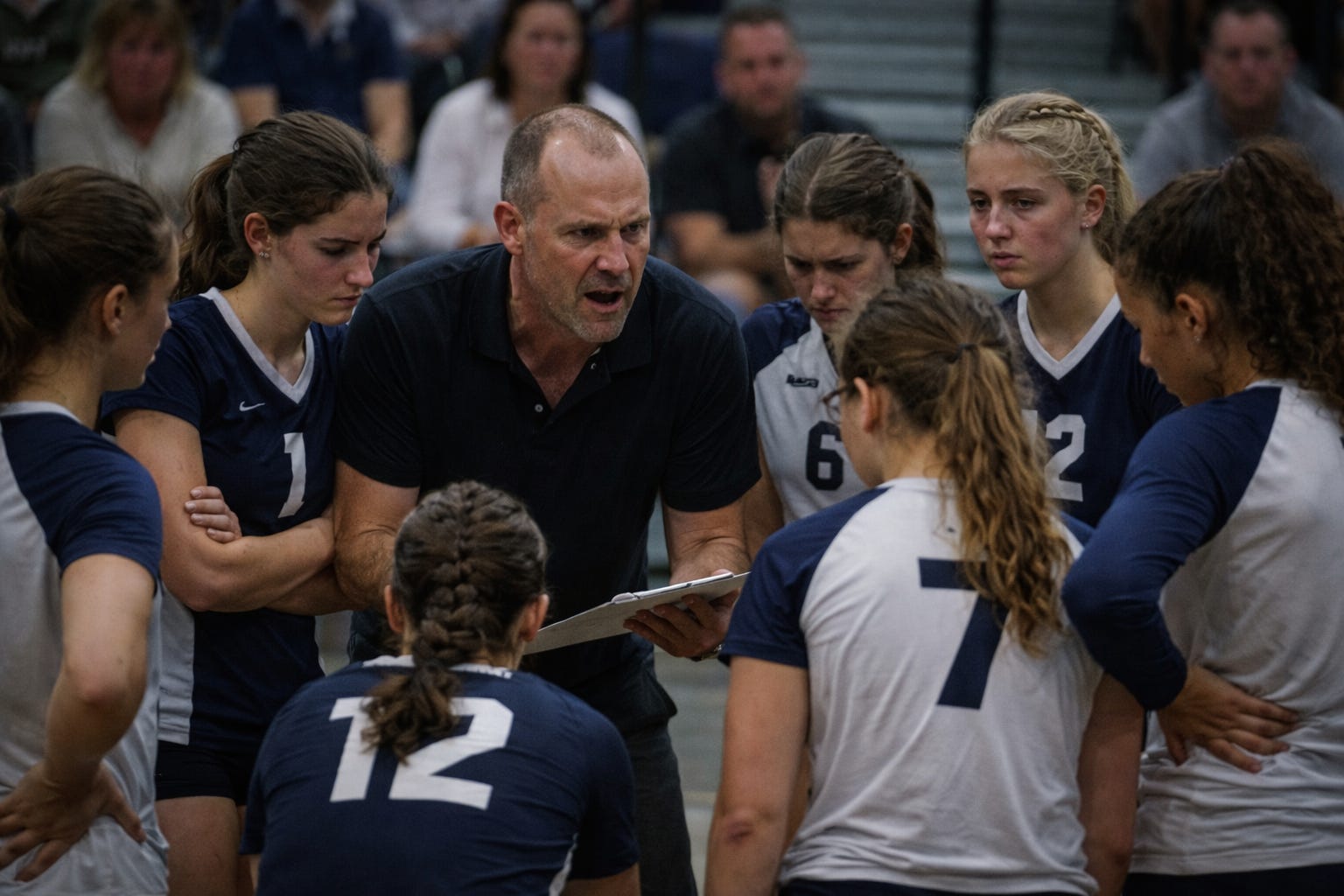
There is a scene that plays out in youth volleyball tournaments all across the country.
A team starts a match flat. They miss serves. They look hesitant. They lose a few points in a row. The coach calls timeout, and for a brief second, it looks like help might be coming.
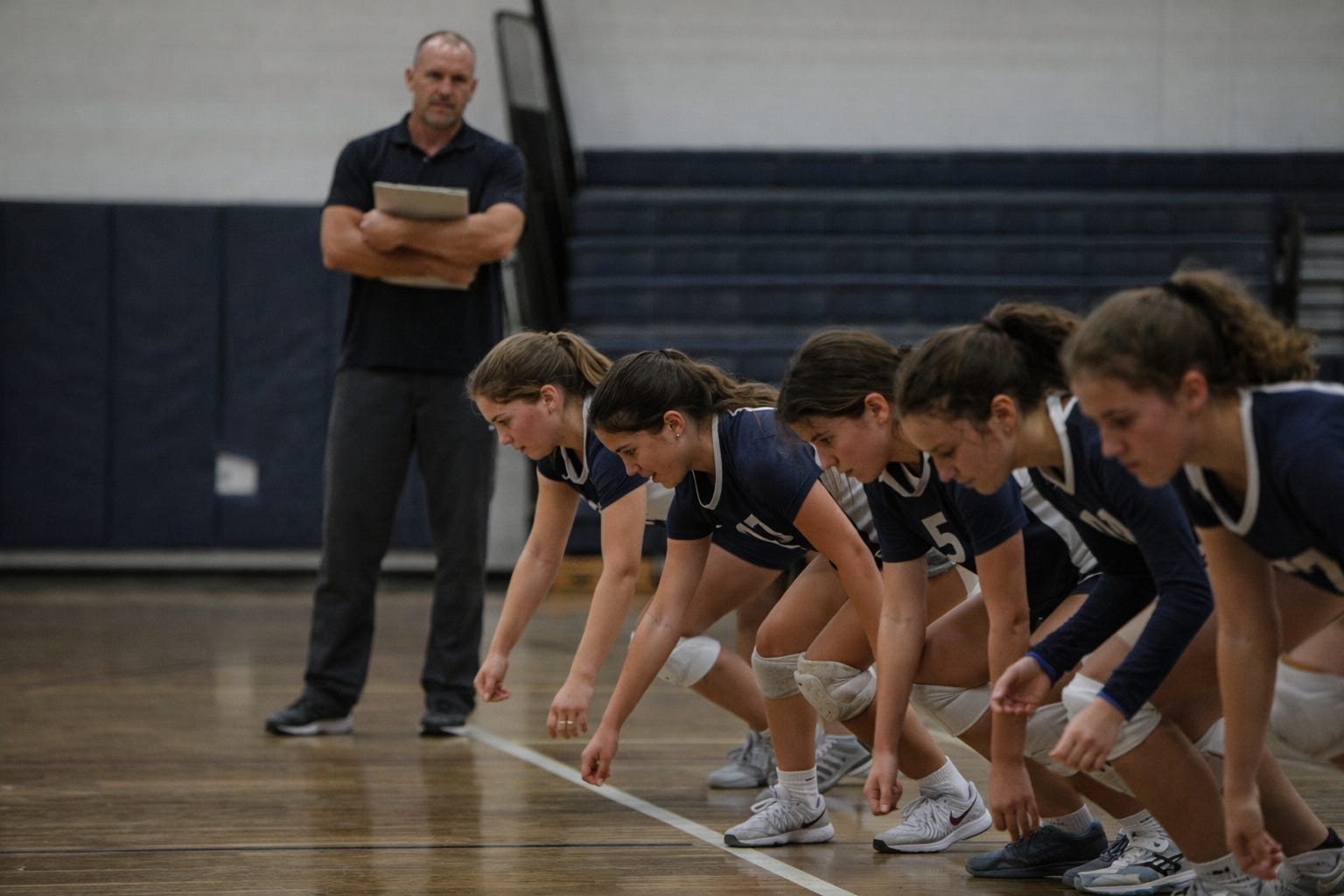
Instead, the players are told to sprint lines.
Not later. Not after the match. Right there, during the timeout. In the middle of competition. While parents watch from the stands and teammates try to make sense of what is happening.
And that moment tells us far more than most people realize.
It does not just reveal a coach who is frustrated. It reveals a whole belief system.
A belief that poor performance deserves punishment.
A belief that fear creates focus.
A belief that physical suffering builds accountability.
A belief that the path to success should be guarded by control, shame, and emotional power.
And maybe most concerning of all, it reveals how normal this still looks to so many people.
Some parents see it and think, good, that coach is holding them accountable.
Some athletes see it and think, this must be what serious coaching looks like.
Some coaches see it and think, this is just part of the game.
But what is actually being taught in that moment?
Not how to read the game better.
Not how to regulate emotion under pressure.
Not how to reconnect with teammates.
Not how to notice what is happening and adapt.
What is being taught is something else entirely.
What is being taught is that mistakes deserve punishment.
That performance problems are a character issue.
That the coach’s anger matters more than the athlete’s understanding.
That success belongs to those willing to endure humiliation, fear, and control without questioning the method.
That is part of why these coaching behaviors persist.
Not because they are especially good at helping athletes learn, but because they create and reinforce belief in their own necessity.
They do not just shape behavior. They shape what athletes, parents, and coaches come to believe about learning itself.
And that is where this gets deeper than “some coaches are too intense.”
A lot of harmful coaching survives not only through tradition, ego, and power. It survives because it teaches everyone around it to stop asking better questions.
It teaches parents to confuse harshness with standards.
It teaches athletes to confuse anxiety with commitment.
It teaches assistant coaches to confuse control with leadership.
It teaches whole programs to confuse selective suffering with excellence.
Over time, the method becomes the myth.
The myth says serious coaching has to feel harsh.
The myth says if athletes are scared, that means they care.
The myth says if a player is being publicly embarrassed, that is just accountability.
The myth says winning proves the method.
The myth says the coach who intimidates, shames, blames, and gatekeeps must know something the rest of us do not.
And once that myth takes hold, the system starts protecting itself.
Parents excuse what they would never tolerate in almost any other setting.
Athletes start to internalize it. They learn to blame themselves before asking better questions. They learn to chase approval instead of information. They learn to see mistakes not as part of learning, but as evidence that they are failing the performance of being a “good athlete.”
Some of them stay in the sport and become deeply anxious. Some become passive and approval-seeking. Some become dependent on the coach for every answer. Some quit and walk away thinking they were not tough enough, when really they were stuck in a system that confused fear with development.
And yes, some succeed.
That is the part people always point to.
A harsh coach wins.
A demanding coach produces a few tough kids.
A controlling system turns out a handful of high performers.
But success does not automatically validate the method.
That is one of the biggest lies in youth sport.
Because success can hide a lot.
It can hide the athlete who never learned to think for herself.
It can hide the athlete who performs well but hates the game.
It can hide the athlete who became obedient but brittle.
It can hide the parent who now believes suffering is simply the price of progress.
It can hide the younger coach who watches from the sideline and decides this is what coaching is supposed to be.

This is why I keep coming back to the same uncomfortable point:
These coaching methods do not only affect behavior. They shape beliefs. They teach a distorted theory of learning.
They teach that fear sharpens performance.
They teach that shame builds resilience.
They teach that blame creates accountability.
They teach that more control equals more clarity.
They teach that the best learners are the most compliant ones.
But that is not a very good description of how learning actually works.
If you have read some of my earlier pieces, this is the same tension showing up again in a different outfit. It is there in the tendency to blame the body before looking at attention and intention. It is there in the obsession with clean-looking movement over adaptable skill. It is there in the coach becoming the obstacle. It is there in the cue confusion.
Different article. Same disease.
Too much of youth sport still teaches people to trust authority more than learning.
That matters because challenge and coercion are not the same thing.
A demanding coach can still create safety.
A disciplined gym can still have joy.
A serious team can still laugh.
A high-standard environment can still make room for mistakes, questions, adjustment, and trust.
That is not “soft.” That is good coaching.
What is soft is using punishment when you do not know how to help.
What is lazy is making kids run because you cannot regulate your own frustration.
What is weak is calling fear “accountability” because it gives you power in the moment.
Take that timeout again.
The team is struggling. The coach has maybe thirty seconds to help them. To settle them. To direct attention. To reconnect the group. To help them read what is happening and act on it.
Instead, they run lines.
That timeout is no longer a space for learning. It becomes a ritual of public control.
The players are not being taught how to solve the game. They are being taught how to perform submission.
And the stands learn too.
The parents watching are given a lesson in what “good coaching” supposedly looks like.
The athletes are given a lesson in what “mental toughness” supposedly looks like.
The assistant coaches are given a lesson in what “accountability” supposedly looks like.
And all of them are being miseducated at the same time.
This is why the issue is bigger than whether a coach is mean.
The issue is cultural. It is about what people come to accept as true.
What is learning?
What is discipline?
What is toughness?
What is accountability?
If the answer to all four is some version of fear, compliance, and suffering, then we have not just built bad practices. We have built bad beliefs.
And bad beliefs are hard to uproot once they become tradition.
The athlete who grows up in these systems may carry those beliefs for years.
She may believe struggle means she is broken.
She may believe authority always knows best.
She may believe asking questions is weakness.
She may believe mistakes deserve punishment.
She may believe joy is optional, fear is normal, and the only path forward is pleasing the person with power.
That is a brutal thing to teach a young person under the banner of development.
So no, this is not just about a few old-school coaches being loud at tournaments.
This is about a culture that still too often confuses domination with leadership, obedience with learning, and control with competence.
And until we challenge those deeper beliefs, the methods will keep surviving. Not because they work especially well, but because too many people have been taught not to question them.
The most dangerous coaching methods are not just the ones that hurt athletes. They are the ones that teach everyone to mistake the hurt for help.
If you want to dig deeper
There is a substantial body of research showing that controlling coaching styles are associated with greater fear of failure and more constrained forms of commitment, while more autonomy-supportive climates are linked to healthier motivation and development. There is also a growing body of work in ecological dynamics and the constraints-led approach arguing that athletes learn through interaction with meaningful game problems, not through punishment, intimidation, or blind compliance.
A few strong starting points:
Impact of a controlling coaching style on athletes’ fear of failure
Relations between empowering and disempowering coach-created climates and athlete outcomes
Empowering and Disempowering Motivational Coaching Climate: A Scoping Review
I know this one may hit a nerve.
If you’ve seen this kind of coaching up close, as a player, parent, coach, or administrator, I’d be curious what you think it actually taught the people involved. Did it help? Did it harm? Did it shape what you believed good coaching was supposed to look like?
"Instead, the players are told to sprint lines."
Not often, but when I'm refereeing a tournament I sometimes see this happen. I've often wondered if I should sanction this misconduct. After reading your thoughts and checking them against my gut feeling, I'm going to sanction it the next time I see it.
The question for me, is this
- Unsportsmanlike
- Rude
- Offensive
- Aggressive
behavior, as that determines the level of sanction that will be awarded to the coach.
As a long time coach of school and club volleyball, my take on this kind of "on court" punishment/consequences during competition is one of absolute disrespect to the players, parents, and I consider it somewhat of an embarrassment to all concerned - I've seen coaches have their players run lines, perform rolls, burpee's, etc. for various mistakes/errors during both club and school matches - If deployed, such consequences should be utilized during practice in a more focused and private environment - Personally, I've not once considered such a thing during competition in three decades of volleyball - It's painful/frustrating to watch and I always have to check myself to not approach such coaches with my concerns along with a "What in the world are you thinking...", coupled with a Batman/Robin slap, lol - Kidding of course but you get the idea... \m/